Water ingress & leak repair
We trace leaks to their source — windows, decks, parapets, penetrations, transitions, and failed sealant — and rebuild the assembly so they don't return.
Common leak sources
- Window and door perimeters
- Deck and balcony transitions
- Parapet and roof-to-wall joints
- Penetrations (pipes, vents, anchors)
- Cladding transitions and joints
- Failed or missing sealant
Investigation methods
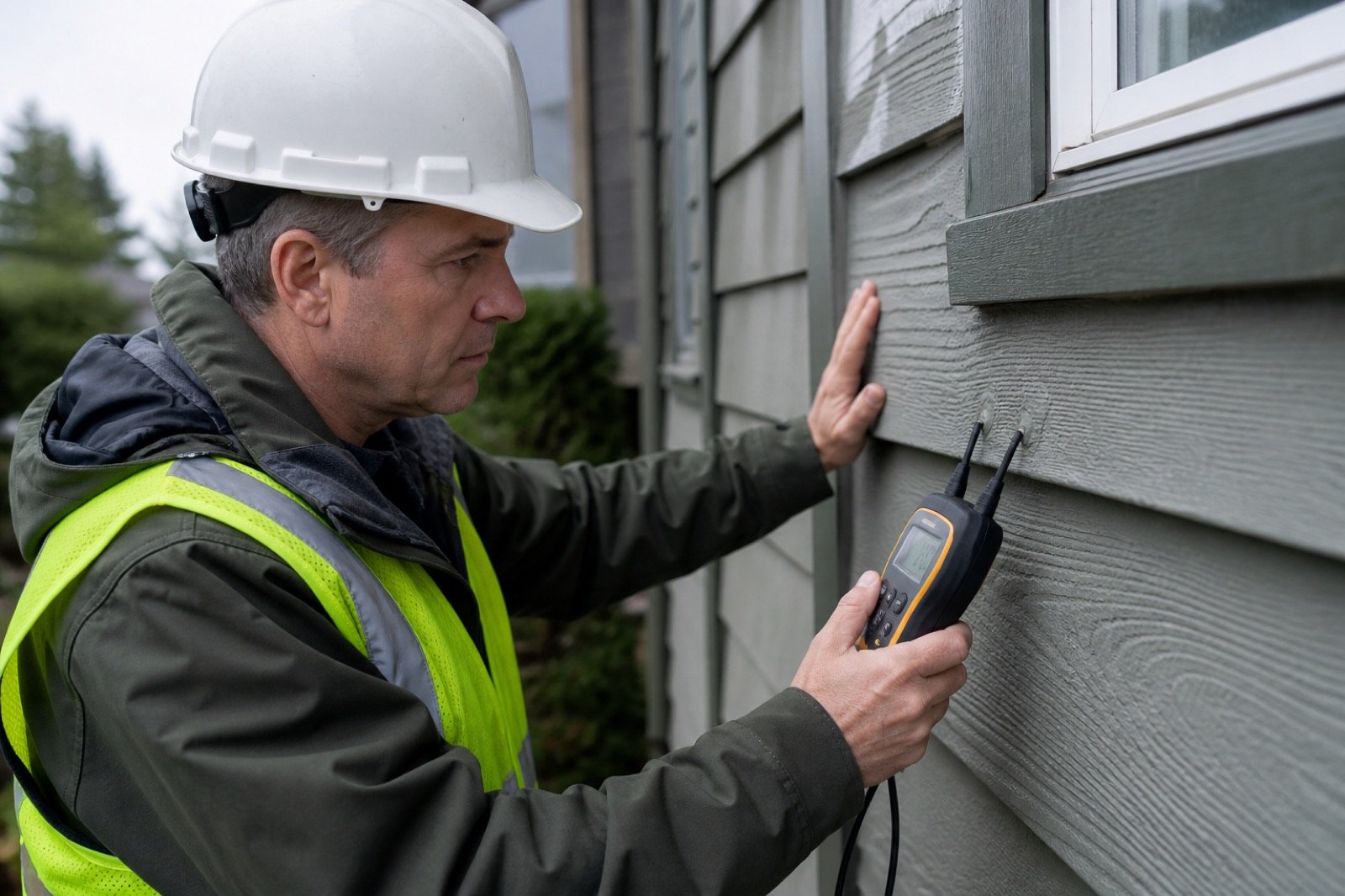
We start with a visual inspection of the assembly and surrounding conditions, then use moisture meters to map affected areas and track how far water has travelled. Where the source isn't obvious, we run targeted water testing — wetting specific areas of the assembly in sequence to isolate the entry point — and open small exploratory sections where needed to confirm what's happening behind the finish before recommending a repair.
Repair approach
Once the moisture path is identified, we define a targeted repair scope — replacing failed components, re-detailing flashings, and restoring the drainage plane — rather than applying surface patches.
Documentation for insurance and strata
We provide written reports and photo documentation suitable for insurance adjusters and strata council review.
Frequently asked questions
How do you find the source of a leak?
We use visual inspection, moisture meters, targeted water testing, and exploratory openings to trace moisture paths through the assembly before recommending repairs.
Can you provide documentation for insurance or strata?
Yes. We provide written reports, photo documentation, and scope details suitable for insurance claims and strata council review.
Do you repair or replace?
We recommend the minimum effective repair that addresses the root cause. Where the assembly has been compromised, partial or full replacement may be required.
How quickly can you respond?
For an active leak, call us directly — we prioritize active water intrusion over scheduled work. Non-emergency leak investigations are typically booked within a few business days, though wait times run longer during the fall and winter wet season when call volume across the industry is highest.